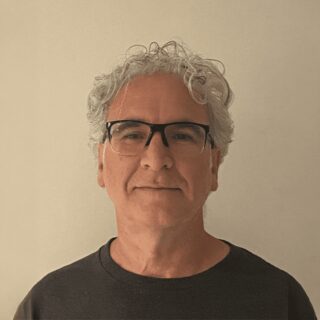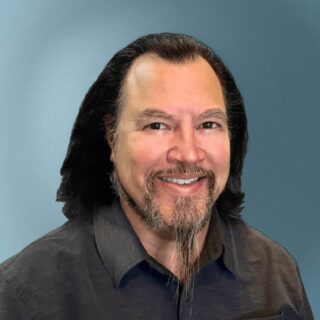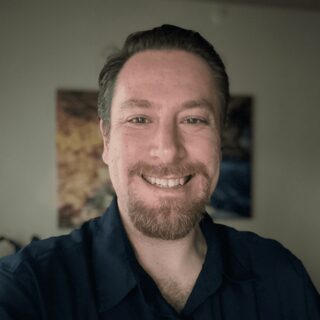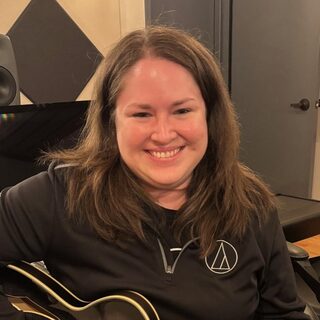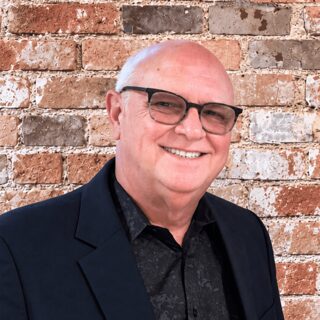
Frank Wells
Editorial Director, Clyne Media, Inc.
For Frank Wells, a career in professional audio began with two interests that have guided him ever since: making music and understanding how things work. As a teenager on Okinawa, where his father was stationed in the military, Wells learned guitar from friends and studied electronics with a retired Marine who taught at his Department of Defense high school. Before long, he was repurposing components from an old console stereo and building guitar effects, guided by Craig Anderton’s Guitar Player columns and Electronic Projects for Musicians. Hearing Al Di Meola perform helped put his own musical ambitions in perspective. “Listening to Al Di Meola play with Return to Forever when we were the same age convinced me that I’d never be more than a hobbyist musician,” Wells recalls. “But having fun playing with sound set the stage for electronics as a possible career path.”
Read Frank’s story
That curiosity eventually carried Wells through military communications, broadcast engineering, recording studios, trade journalism and public relations. Today, as Editorial Director at Clyne Media, he draws on those experiences to help audio companies communicate with the industry—including through his work with PAMA. “Technology has been my career focus and specialty, regardless of industry,” he notes. His work has ranged from installing and maintaining equipment to helping professionals stay informed about audio technology, products, applications and business.
Through Clyne Media, Wells participates in PAMA’s marketing team and has helped survey members on shared concerns, from the pandemic to emerging technology. For someone whose career has repeatedly grown through connections with colleagues, the organization’s value is clear. “PAMA is a great vehicle for that human networking,” he says. “Our companies compete, and we don’t share trade secrets, but we all do better because of what we learn from each other.”
Wells also values the broader perspective those exchanges provide. “When we gather perspectives from across the industry, we learn to think outside our niche,” he explains. “With insights gathered from PAMA online meetings and presentations, and from face-to-face dialog with staff from member companies, I’ve improved my communication with the wider industry. Participation in PAMA pays dividends.”
Wells’s first professional step was joining the U.S. Air Force after high school, seeking electronics training, practical experience and GI Bill support for college. As a ground radio communications repair technician, he worked with audio within the limited bandwidth required for voice communications. Broadcast radio offered a way to build on that foundation, leading him to Middle Tennessee State University’s Mass Communications program, with a Radio/TV/Film emphasis. He also fit in a Technology of Recording class and interned with the chief engineer of the university’s 50 kW public FM station. Upon graduation in 1982, he stepped into the chief engineer position himself.
“I had to up my audio game there,” Wells recalls, “with dozens of reel-to-reel recorders, cart machines, cassette recorders, microphones and consoles to take care of.” After six years in radio, a former intern introduced him to Glenn Meadows at Masterfonics Studios in Nashville. Wells became Masterfonics Chief of Technical Services in 1988, entering the studio world at the top tier. He describes those years as “a marvelous playground on the bleeding edge of sonics and digital audio tech,” where his responsibilities included modifying equipment, maintaining facilities and developing the technical infrastructure of new recording spaces.
Masterfonics also provided lasting lessons about the human side of technical work. For instance, when regular client producer Barry Beckett was leading a tracking session and there was an equipment mishap, Wells would be faced with both an engineering problem and a room full of tense musicians. “First order was to rapidly isolate the problem and fix or bypass it,” he says. “Second, before I left the room, I learned that I had to say something to make Barry smile. Then the tension would ooze out of the players and the room and music-making would resume.”
The experience shaped a principle that still informs his work: “People are critical technology. Any link failure will break a chain. Take care of every link, be it the phone that’s acting up for the receptionist using it, the console whose power supply decided to take up smoking or the engineer pushing its buttons.”
As recording technology and business models changed, Wells found a new way to put his expertise to work in the world of trade journals. Reviews and equipment bench tests for Pro Audio Review led to an offer to become the founding editor of Audio Media USA in 1997. He joined Pro Sound News in 2000, beginning a 15-year tenure before moving into independent consulting, communications and content work. His clients and collaborators included a UK publisher, the Audio Engineering Society and Clyne Media. Today, his professional focus is on Clyne Media and its clients, alongside continued AES volunteer service.
Staying connected to new ideas remains a priority. Wells follows audio trade newsletters and digital publications, while his involvement with AES provides opportunities to encounter emerging technology and learn from colleagues. An AES Nashville leadership committee member for 30-plus years, AES Past President and Life Fellow, he has also devoted years to the Nashville and international audio communities, including as a founding board member of the Nashville Engineer Relief Fund and through 28 years of helping secure its funding as a key organizer of the AudioMasters Benefit Golf Tournament.
For those beginning an audio career, Wells recommends pursuing a goal while remaining open to unexpected opportunities. “Chase your dream career but take advantage of opportunities to experience a variety of aspects of the industry,” he advises. “As a radio tech with some on-air dabbling, a studio tech with a touch of session work, and a side-hustle-born trade journalist, every turn, twist and advance came from trying different things.”
Just as essential, he adds, are the relationships built along the way. “Beyond expanding your knowledge, expand your human network. Volunteer to participate in activities that let you meet people, let them meet you. And once you learn something, look for ways to share your knowledge and experience. Today’s intern may be tomorrow’s employee and in two years your client.”
Posted October 2026